Aug 05, 2026
Why Pretend Play Helps Kids Learn, Build Confidence, and Solve Problems
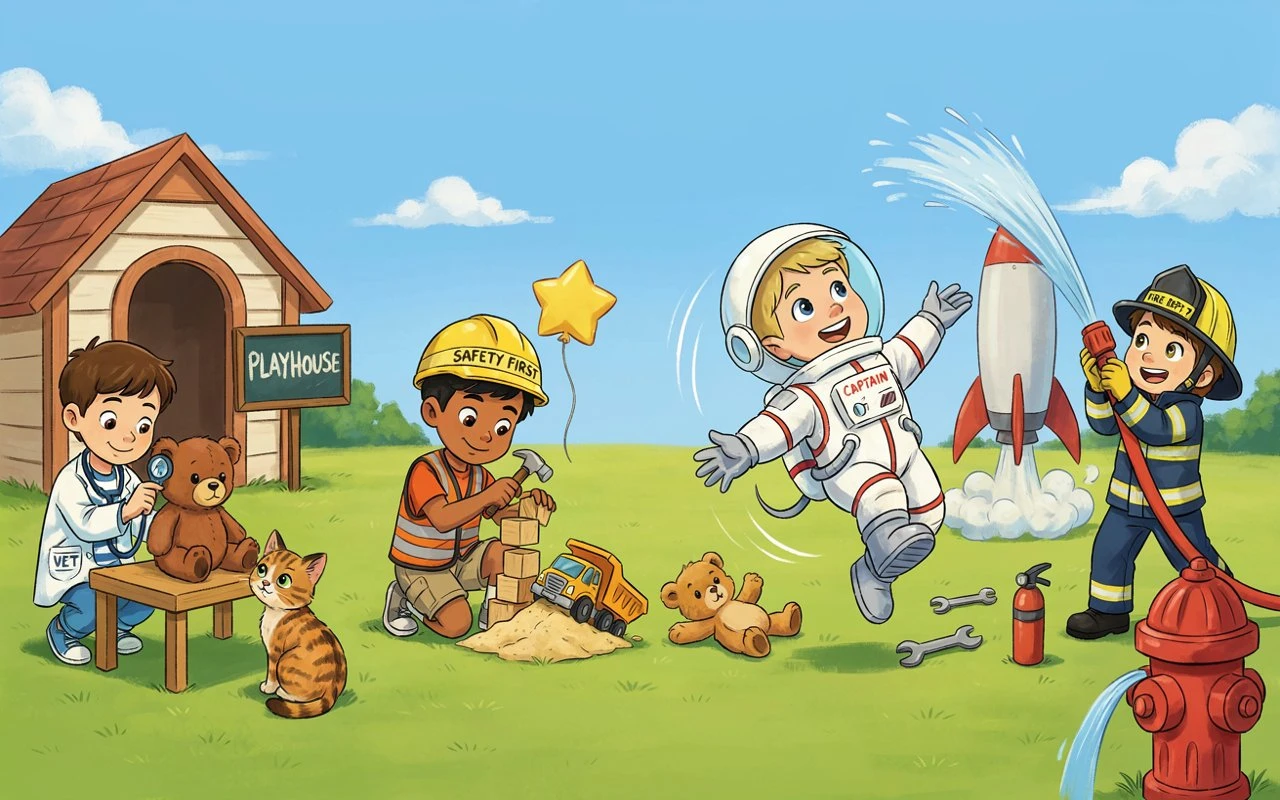
Did you know that one of the most powerful learning tools for young children doesn't require batteries, screens, or expensive technology?
It's called Pretend Play.
When children put on a toy stethoscope, fly an imaginary airplane, build a cardboard city, or teach a classroom full of stuffed animals, they're doing much more than having fun. They're developing essential life skills that will benefit them throughout childhood and beyond.
Researchers and educators have long recognized imaginative play as a valuable part of healthy child development. Through pretend play, children learn to think creatively, communicate effectively, solve problems, and build confidence in themselves.
Whether you're a parent, homeschool family, grandparent, or teacher, encouraging imaginative play is one of the best investments you can make in a child's future.
What Is Pretend Play?
Pretend play sometimes called imaginative play, dramatic play, or role play, is when children use their imagination to act out different situations, stories, or careers.
For example, a child might pretend to be:
- A doctor helping a patient
- A firefighter rescuing a family
- A pilot flying passengers around the world
- A scientist making an exciting discovery
- A veterinarian caring for animals
- A chef preparing a delicious meal
- An engineer designing a new invention
During these activities, children naturally combine imagination with learning.
They aren't just pretending.
They're practicing real-world thinking.
1. Pretend Play Builds Confidence
One of the greatest gifts pretend play gives children is confidence.
When children pretend to be capable professionals, they begin believing they can solve problems and accomplish meaningful tasks.
Imagine a child pretending to be a doctor.
They might:
- Welcome a patient
- Ask questions
- Diagnose a pretend illness
- Recommend treatment
Even though it's imaginary, the child is practicing leadership, communication, and decision-making.
Every successful pretend scenario reinforces the message:
"I can do hard things."
Confidence grows through experience and pretend play provides countless opportunities to practice.
2. Pretend Play Strengthens Problem Solving Skills
Real life jobs involve solving problems every day.
Pretend play gives children safe opportunities to think through challenges independently.
For example:
A firefighter may need to decide how to rescue someone.
A mechanic may figure out why a car won't start.
An engineer may redesign a bridge after it "breaks."
A farmer may decide how to protect crops during a storm.
Instead of being told exactly what to do, children begin asking themselves questions like:
- What happened?
- Why did it happen?
- What could I try next?
- Is there another solution?
These are the same critical thinking skills they will use in school and throughout life.
3. Pretend Play Encourages Creativity
Children naturally imagine possibilities adults might never consider.
A cardboard box becomes a spaceship.
A blanket becomes a tent.
A chair becomes an airplane cockpit.
Creativity develops every time children invent stories, solve imaginary challenges, and create new adventures.
There are no wrong answers.
Only new ideas.
This freedom helps children become flexible thinkers who are willing to experiment, adapt, and innovate.
4. Pretend Play Supports Early STEM Learning
Many parents hear the word STEM and immediately think of complicated science experiments.
In reality, STEM begins much earlier.
Children explore STEM concepts whenever they:
- Build towers
- Design bridges
- Draw inventions
- Compare weather
- Plan airplane routes
- Observe plants growing
- Fix pretend machines
Without realizing it, they're exploring:
- Science
- Technology
- Engineering
- Mathematics
through everyday play.
The best STEM activities often begin with a simple question:
"What do you think would happen if...?"
5. Pretend Play Improves Communication Skills
During pretend play, children are constantly talking.
They explain.
They negotiate.
They ask questions.
They tell stories.
Whether playing with siblings, classmates, friends, or adults, children practice important language skills by:
- Giving instructions
- Explaining ideas
- Listening carefully
- Taking turns speaking
- Asking thoughtful questions
These conversations strengthen vocabulary and help children become confident communicators.
6. Pretend Play Develops Empathy
When children step into someone else's role, they begin seeing the world from different perspectives.
A veterinarian learns to care for animals.
A doctor comforts a nervous patient.
A teacher encourages students.
A police officer helps keep people safe.
A firefighter protects families.
Children begin asking:
"How does this person help others?"
Understanding different roles encourages kindness, compassion, and respect for people in every profession.
7. Pretend Play Encourages Independent Thinking
Unlike many electronic games that guide every action, pretend play is open ended.
Children decide:
- What happens next
- Which tools they need
- How to solve problems
- How the story ends
There isn't one "correct" answer.
This freedom helps children become more independent learners.
8. Pretend Play Makes Learning Memorable
Children remember experiences much better than lectures.
Instead of simply reading about weather, they can become a meteorologist.
Instead of hearing about farming, they can pretend to care for crops and animals.
Instead of memorizing transportation facts, they can plan flights as a pilot.
Learning becomes exciting because children are actively participating instead of passively watching.
Simple Ways to Encourage Pretend Play at Home
The wonderful thing about imaginative play is that it doesn't require expensive toys.
Try these easy ideas:
Create a Dress Up Box
Fill a container with inexpensive items such as:
- Hats
- Scarves
- Toy tools
- Lab coats
- Safety vests
- Aprons
Children can mix and match careers.
Ask Open Ended Questions
Instead of giving directions, ask questions like:
- What problem are you solving today?
- How will your invention work?
- What would happen next?
- Who needs your help?
Questions encourage deeper thinking.
Let Children Lead
Resist the urge to direct every activity.
Sometimes the best learning happens when children create their own stories.
Add Drawing and Writing
Invite children to:
- Design inventions
- Draw buildings
- Plan farms
- Create restaurant menus
- Record weather
- Sketch airplanes
Combining drawing with pretend play strengthens creativity and fine motor skills.
Career Themed Pretend Play Makes Learning Even More Exciting
Many children enjoy pretending to be different professionals because every career introduces new adventures.
One day they might be:
👩⚕️ A Doctor helping patients
✈️ A Pilot flying across the world
🛠️ An Engineer designing amazing inventions
🚜 A Farmer caring for animals
🔬 A Scientist making discoveries
🚒 A Firefighter protecting the community
Each role introduces new vocabulary, new challenges, and new opportunities to think creatively.
Discover the Pretend Play Careers for Kids Series
The Pretend Play Careers for Kids collection was created to encourage children to explore exciting careers through hands-on learning and imagination.
Current titles include:
- Doctor
- Veterinarian
- Teacher
- Chef
- Astronaut
- Firefighter
- Police Officer
- Construction Worker
- Meteorologist
- Scientist
- Engineer
- Pilot
- Farmer
- Mechanic
Each workbook includes:
- Career themed activities
- Drawing challenges
- STEM inspired projects
- Creative writing prompts
- Problem solving missions
- Certificates and role play pages
- Screen free educational fun
Whether your child dreams of helping people, building machines, exploring space, or caring for animals, there's a career adventure waiting for them.
Final Thoughts
Pretend play isn't "just playing."
It's one of the most natural and effective ways children learn.
Through imaginative play, children develop confidence, creativity, communication skills, empathy, and problem solving abilities that prepare them for success in school and everyday life.
Most importantly, pretend play gives children permission to dream.
Today's pretend doctor could become tomorrow's physician.
Today's young engineer could design tomorrow's bridges.
Today's curious scientist may make tomorrow's discoveries.
So the next time your child announces they're flying an airplane from the living room or opening a veterinary clinic for stuffed animals, remember:
They're not just pretending.
They're practicing the skills that will help them build a bright future.

25 Best Pretend Play Career Ideas for Kids That Build Confidence and Creativity