Sep 07, 2026
How to Create a Music Practice Schedule You’ll Actually Stick To

You want to get better at your instrument. You know regular practice matters. You may even have every intention of practicing several times a week.
Then life happens.
A busy day turns into a missed practice session. You sit down the next evening but aren't sure what to work on. Twenty minutes disappear playing songs you already know. By the weekend, you're trying to make up for several missed days with one long practice session.
Sound familiar?
A good music practice schedule can help.
The goal isn't to fill every available minute with scales and exercises. It's to create a realistic routine that tells you when to practice, what to practice, and what you're trying to accomplish.
Whether you play piano, guitar, violin, banjo, ukulele, another instrument, or you're helping a child develop better practice habits, this guide will show you how to create a music practice schedule you can actually maintain.
Why You Need a Music Practice Schedule
Without a plan, practice tends to become reactive.
You pick up your instrument and think:
“What should I work on today?”
You play a few familiar songs, try something difficult, get distracted, and eventually put the instrument away.
You practiced, but did you move closer to your musical goals?
A practice schedule gives each session a purpose.
It can help you:
- Practice more consistently
- Spend less time deciding what to do
- Balance technique and songs
- Work systematically on difficult skills
- Prepare for lessons, rehearsals, or performances
- Track improvement
- Avoid spending every session on your favorite material
- Make better use of limited practice time
Most importantly, a schedule turns a large goal like “become a better musician” into smaller actions you can complete today.
Step 1: Start With Your Real Schedule
Before deciding how much you should practice, look at how much time you actually have.
This is where ambitious practice schedules often fail.
You might imagine:
I'll practice for an hour every day.
But if work, school, family, homework, dinner, and other commitments leave you exhausted most evenings, that schedule probably won't last.
Instead, ask:
Which days can I realistically practice?
What time of day usually works best?
How much uninterrupted time do I normally have?
Perhaps your realistic schedule is:
Monday: 30 minutes
Tuesday: 20 minutes
Wednesday: No practice
Thursday: 30 minutes
Friday: 20 minutes
Saturday: 45 minutes
Sunday: Optional review
That's better than creating a seven-day schedule you abandon after the first week.
Remember:
A realistic practice schedule you follow is more useful than a perfect schedule you don't.
Step 2: Choose Your Weekly Practice Frequency
You don't necessarily need to practice seven days a week.
For many recreational musicians and students, several focused sessions spread throughout the week can provide a practical starting point.
Beginners might start with shorter sessions.
More advanced musicians preparing for performances may need longer or more frequent sessions.
Instead of focusing only on total minutes, focus on consistency and purpose.
For example:
Beginner
15–25 minutes
4–5 days per week
Developing Student
25–40 minutes
4–6 days per week
Intermediate Musician
30–60 minutes
5–6 days per week
These aren't rules. They're starting points.
Your teacher, instrument, goals, age, physical comfort, and available time should determine what works for you.
Step 3: Set One Monthly Music Goal
Before creating individual practice sessions, decide what you're working toward.
Choose one primary goal for the month.
Examples:
- Learn one complete song
- Improve sight-reading
- Play a scale cleanly at 100 BPM
- Master three new chords
- Improve chord transitions
- Memorize a recital piece
- Learn three banjo roll patterns
- Improve bow control
- Build finger strength
- Prepare five songs for a jam session
Make the goal specific enough that you'll recognize when you've achieved it.
Instead of:
Improve at piano
try:
Play my current piece from beginning to end at the target tempo with consistent rhythm.
Instead of:
Get faster at banjo
try:
Play my forward-reverse roll cleanly at 100 BPM.
Specific goals make scheduling much easier.
Step 4: Turn Your Monthly Goal Into Weekly Goals
A monthly goal can still feel distant.
Break it into smaller weekly targets.
Suppose your monthly goal is:
Play a new song confidently at 100 BPM.
Your weekly plan might look like this:
Week 1: Learn the notes and chord progression.
Week 2: Work on difficult sections at 70 BPM.
Week 3: Connect all sections and reach 85 BPM.
Week 4: Work toward 100 BPM and practice full performances.
Now every week has a purpose.
This also prevents the familiar end-of-month realization:
I meant to work on that song, but somehow the month disappeared.
Step 5: Turn Weekly Goals Into Daily Actions
This is where your music practice schedule becomes useful.
Suppose your weekly goal is:
Improve the difficult middle section of a song from 70 BPM to 80 BPM.
Your daily schedule could become:
Monday
Practice measures 16–20 slowly at 70 BPM.
Tuesday
Practice measures 20–24 and review Monday's section.
Wednesday
Rest or listen to the piece.
Thursday
Connect measures 16–24 at 75 BPM.
Friday
Work on mistakes and chord transitions.
Saturday
Attempt the section at 80 BPM and record yourself.
Now you don't sit down wondering what to practice.
You've already made the decision.
The Monthly → Weekly → Daily Method
One of the easiest ways to organize music practice is:
MONTHLY GOAL
What do I want to accomplish?
↓
WEEKLY GOAL
What needs to improve this week?
↓
DAILY ACTION
What specific thing will I work on today?
For example:
Monthly: Learn Song A.
↓
Weekly: Play the chorus smoothly at 90 BPM.
↓
Daily: Practice measures 12–20 five times at 75 BPM.
This system works because it connects every practice session to something larger.
How to Divide Your Practice Time
Once you've scheduled your practice days, decide what happens during each session.
A balanced practice session might include five areas:
1. Warm-Up
Scales, finger exercises, chord changes, rolls, long tones, bowing exercises, or another instrument-specific warm-up.
2. Technique
Work on a particular skill.
Examples:
- Picking
- Chord transitions
- Scales
- Rhythm
- Arpeggios
- Bow control
- Rolls
- Finger independence
3. Repertoire
Work on songs or pieces you're currently learning.
4. Problem Area
Spend focused time on the part that's giving you trouble.
5. Review or Fun
Play something you enjoy, improvise, sight-read, write music, or revisit an older song.
You don't need to give every category equal time.
Your current goal should determine where most of your attention goes.
Example 20-Minute Music Practice Schedule
Short on time?
Try:
3 minutes — Warm-up
5 minutes — Technique
7 minutes — Current song
3 minutes — Difficult section
2 minutes — Review and practice notes
A focused 20-minute session can still accomplish a lot.
Example 30-Minute Music Practice Schedule
Try:
5 minutes — Warm-up
7 minutes — Technique
10 minutes — Repertoire
5 minutes — Problem area
3 minutes — Review and notes
This is a practical routine for many students and recreational musicians.
Example 45-Minute Music Practice Schedule
Try:
5 minutes — Warm-up
10 minutes — Technique
15 minutes — Current repertoire
10 minutes — Difficult section or secondary piece
5 minutes — Creativity, performance, or review
Example 60-Minute Music Practice Schedule
For longer sessions:
10 minutes — Warm-up and technique
15 minutes — Song or Piece #1
10 minutes — Problem section
10 minutes — Song or Piece #2
10 minutes — Sight-reading, improvisation, songwriting, or another skill
5 minutes — Review and progress tracking
Breaking the hour into sections can help prevent mindless repetition.
Don't Practice Everything Every Day
This is especially important if you're working on several skills.
You don't necessarily need to practice:
scales + chords + sight-reading + improvisation + three songs + music theory + technique + ear training
every single day.
Instead, use a rotating schedule.
For example:
Day Main Focus
Monday Technique + Song A
Tuesday Chords + Song B
Wednesday Rest
Thursday Technique + Song A
Friday Sight-reading + Song B
Saturday Full repertoire + fun playing
Sunday Review or rest
Your core skills can appear several times while secondary activities rotate.
This keeps practice manageable.
Schedule Difficult Work When You Have Energy
Not every part of practice requires the same amount of concentration.
If possible, tackle your most demanding work while you're mentally fresh.
For example:
Beginning of session: difficult passage
Middle: technique and repertoire
End: familiar songs or creative playing
If you always save your biggest challenge until the last two minutes, it's easy to skip it.
Use the “Minimum Practice” Rule for Busy Days
One missed practice session isn't a problem.
But one missed day can easily become three.
Create a minimum practice option for busy days.
For example:
If I can't complete my normal 30-minute session, I'll practice for 10 minutes.
Your 10-minute version might be:
2 minutes: Warm-up
3 minutes: Technique
4 minutes: Current problem section
1 minute: Write tomorrow's focus
You still maintain the habit without pretending every day has unlimited time.
Build Rest Into Your Music Practice Schedule
A good schedule can include rest.
You don't have to feel guilty about taking a day off.
Rest days can give you time to:
- Listen carefully to recordings
- Study sheet music or TAB
- Review lesson notes
- Organize music
- Watch a performance
- Think about phrasing
- Plan the next week's goals
And sometimes a rest day should simply be a rest day.
A sustainable schedule needs room for ordinary life.
Create a Practice Schedule Around Your Music Lesson
If you take weekly lessons, use the lesson as the anchor for your schedule.
Suppose your lesson is Tuesday.
Tuesday
Lesson + review teacher notes.
Wednesday
Practice new assignments slowly.
Thursday
Technique + assigned song.
Friday
Work on difficult sections.
Saturday
Longer practice session.
Sunday
Full-song review.
Monday
Review assignments and note questions for your teacher.
Tuesday
Next lesson.
This prevents one of the most common student problems: waiting until the night before the lesson to practice everything.
Track What You Actually Practice
Your planned schedule and your actual practice won't always match.
That's okay.
Record what happened.
A useful daily music practice log might include:
- Date
- Instrument
- Practice duration
- Warm-up
- Technique
- Songs practiced
- Tempo/BPM
- Challenges
- Improvements
- Teacher assignments
- Notes
- Next practice focus
Over time, your practice log can show you patterns.
Maybe you consistently struggle with rhythm.
Maybe you're improving steadily in tempo.
Maybe you keep avoiding sight-reading.
Maybe you're practicing frequently but rarely working on the difficult measures.
That's useful information.
Track Skills, Not Just Minutes
Imagine your practice log says:
Monday — 30 minutes
Tuesday — 35 minutes
Thursday — 30 minutes
Saturday — 45 minutes
That tells you you're practicing consistently.
But compare it with:
Forward roll: 75 → 90 BPM
G-to-C transition: inconsistent → smooth
Song A: verse learned → full song
Scale: frequent mistakes → three clean repetitions
Now you can see actual progress.
Track both when useful:
Time tells you about consistency.
Skill measurements tell you about improvement.
Review Your Practice Schedule Every Week
Your schedule isn't permanent.
At the end of each week, ask:
What went well?
Which skills improved?
What still needs work?
Where are you getting stuck?
Did I practice realistically?
Was your schedule too ambitious?
What should I change next week?
Maybe your 60-minute sessions aren't happening, but you consistently manage 30 minutes.
Change the schedule.
Maybe your current song needs more attention than scales this week.
Adjust the balance.
A useful schedule evolves with you.
Do a Monthly Music Practice Review
At the end of each month, review the bigger picture.
Ask:
What was my main goal?
Did I accomplish it?
What improved most?
Which skill needs more work?
Which songs did I learn?
What should next month's focus be?
You may be surprised by how much you've accomplished.
Musical improvement can feel slow when you're experiencing it one day at a time.
Looking back over four weeks makes progress easier to see.
Music Practice Schedule for Beginners
If you're new to an instrument, keep your schedule simple.
You don't need twelve categories.
Try:
Monday
Chords + Song
Tuesday
Technique + Song
Wednesday
Rest
Thursday
Chords + Song
Friday
Technique + Song
Saturday
Review + Fun Playing
Sunday
Optional practice
Your goal at the beginning is partly musical improvement and partly learning how to practice consistently.
Music Practice Schedule for Kids
Children often benefit from shorter, predictable practice sessions.
Instead of:
Practice until you're finished.
Try:
We'll practice for 15 minutes after snack.
A simple session might include:
3 minutes: Warm-up
5 minutes: Teacher assignment
5 minutes: Current song
2 minutes: Favorite song
A visual practice tracker can also help children see their consistency without making practice solely about accumulating minutes.
Music Practice Schedule for Adults
Adults often face a different problem.
The desire to practice is there.
The uninterrupted time isn't.
Instead of waiting for the perfect 60-minute window, consider building practice around shorter available periods.
Perhaps:
Tuesday: 20 minutes before dinner
Thursday: 30 minutes after work
Saturday: 45-minute focused session
Sunday: 20-minute review
That's a legitimate practice schedule.
You don't need to practice like a conservatory student if your goal is to enjoy music and steadily improve.
What If You Miss a Practice Day?
Don't try to “punish” yourself with a huge practice session.
Simply continue with the schedule.
If Monday's practice doesn't happen, Tuesday doesn't need to become a double session.
Ask:
Is Monday's task important enough to move?
If yes, reschedule it.
If no, continue.
Consistency is built over weeks and months—not by never missing a day.
Common Music Practice Scheduling Mistakes
1. Scheduling Too Much
Going from no routine to two hours every day is unlikely to last.
Start with something sustainable.
2. Only Scheduling Time
“Practice for 30 minutes” tells you when and how long, but not what.
Add a focus.
3. Making Every Day Identical
Your musical needs change.
Rotate skills when appropriate.
4. Ignoring Difficult Sections
Don't allow “practice Song A” to become “play the easy parts of Song A.”
Identify the specific problem.
5. Never Adjusting the Schedule
If the schedule doesn't fit your life, change it.
The schedule works for you—not the other way around.
6. Forgetting to Record Progress
Without tracking, it's easy to overlook improvement or repeat the same unfocused routine.
Try This Simple Weekly Music Practice Planner
Before the week begins, complete these five prompts:
My main goal this week:
Skill I want to improve:
Song or piece I'm focusing on:
My planned practice days:
By the end of the week, I want to be able to:
Then finish the week with:
My biggest improvement:
My focus for next week:
That's enough structure to make your practice more intentional without creating another complicated task.
The Best Music Practice Schedule Is the One You Can Repeat
There's no universal perfect schedule.
A 15-year-old violin student, an adult beginner learning guitar, a bluegrass banjo player preparing for a jam, and a pianist getting ready for a recital shouldn't necessarily follow the same routine.
But the underlying system can remain the same:
Choose a goal.
Break it into weekly targets.
Schedule realistic practice sessions.
Give each session a purpose.
Track what you did.
Review your progress.
Adjust and repeat.
A music practice schedule shouldn't make music feel more complicated.
It should remove the daily question:
“What am I supposed to practice?”
Instead, you can sit down, open your practice plan, and begin.
Turn Your Practice Schedule Into Measurable Progress
If you prefer keeping your schedule, goals, and practice progress together, the Music Practice Log Book is designed around this same system.
It's designed for musicians learning piano, guitar, violin, banjo, ukulele, band and orchestra instruments, and more.
Use the monthly pages to decide where you're going, the weekly pages to break the goal into manageable steps, the daily logs to stay focused, and the skill trackers to see how far you've come.
Because the goal isn't simply to practice more.
It's to make the practice time you already have count.
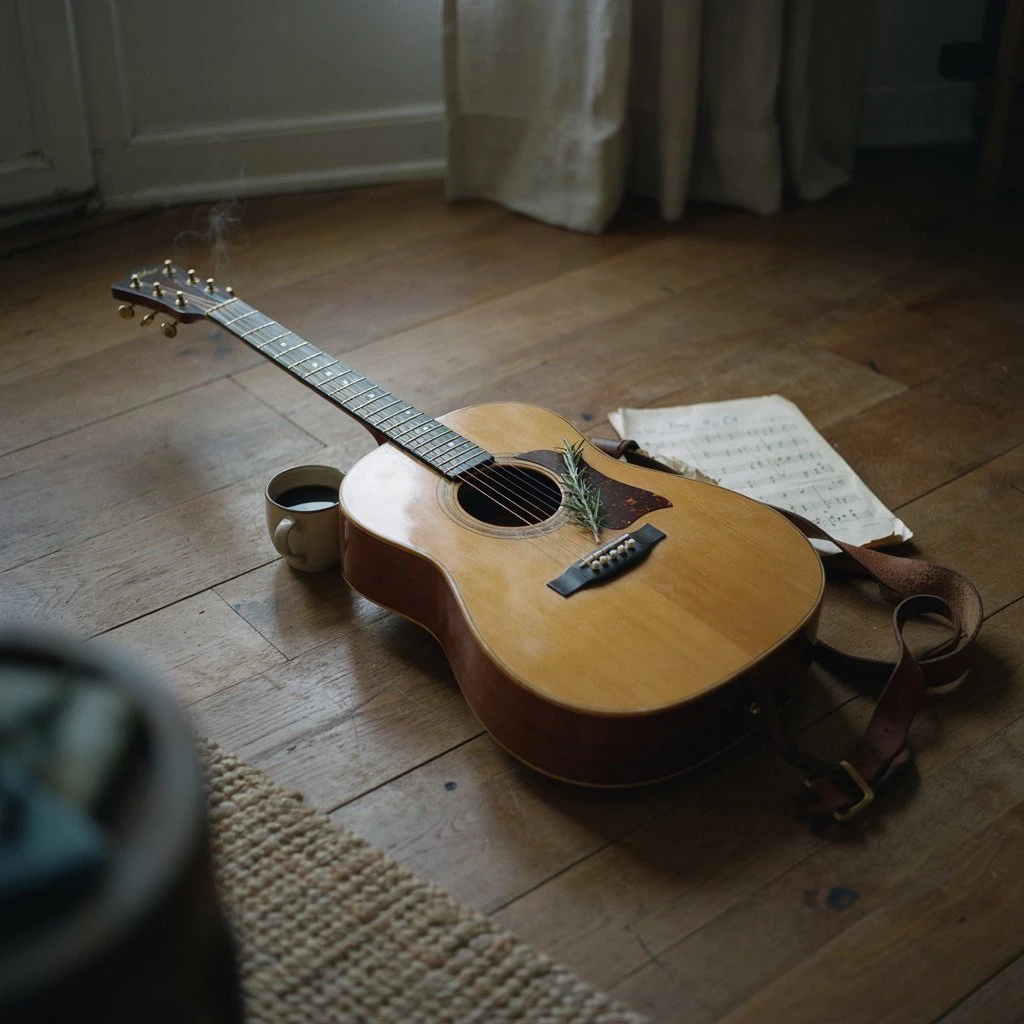
Effective Ways to Practice your Musical Instrument: A Simple Daily Routine that Delivers Results.

How to Write Your First Song: A Beginner’s Step-by-Step Guide