Jun 18, 2026
How Pretend Play Builds Confidence in Kids
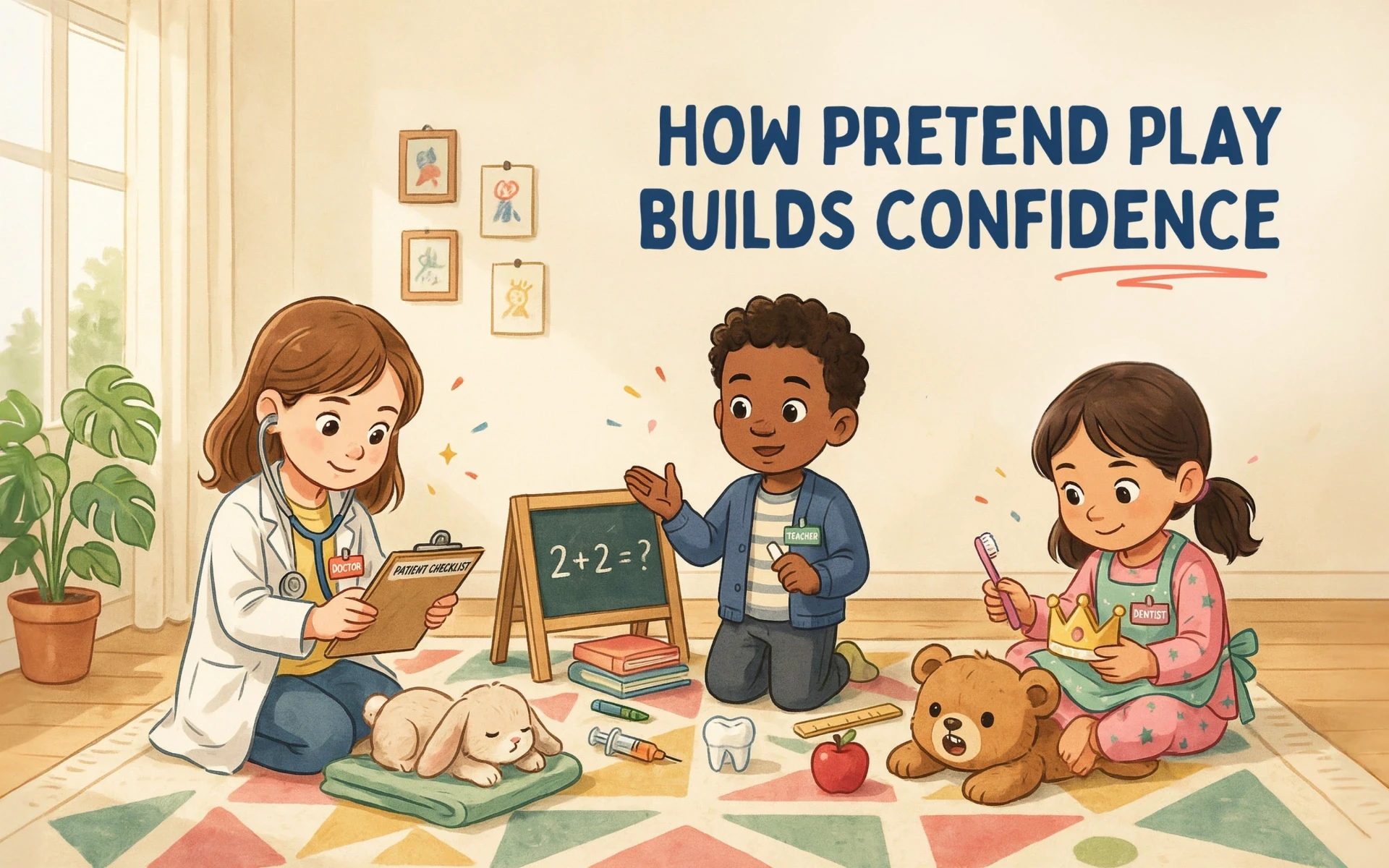
Children are naturally curious, creative, and eager to explore the world around them. One of the most effective ways they learn and grow is through pretend play. Whether they're caring for patients as a doctor, teaching a classroom of stuffed animals, or flying an airplane across the world, pretend play gives children the freedom to imagine, create, and practice real life skills in a safe and supportive environment.
While pretend play is often viewed as simple fun, it actually plays a powerful role in building confidence, independence, communication skills, and self esteem. Let's explore how imaginative play helps children develop the confidence they need to thrive both now and in the future.
What Is Pretend Play?
Pretend play, also known as imaginative play or role play, occurs when children use their imagination to act out different scenarios, characters, or careers. During pretend play, children might become:
By stepping into these roles, children gain opportunities to experiment, problem solve, and learn through hands on experiences.
Why Confidence Matters for Children
Confidence is more than simply feeling good about oneself. Confident children are more likely to:
- Try new things
- Ask questions
- Express their ideas
- Solve problems independently
- Handle challenges and setbacks
- Build healthy relationships
Confidence helps children develop resilience and encourages them to keep learning, even when tasks become difficult.
1. Pretend Play Allows Kids to Take the Lead
One of the biggest confidence boosters in pretend play is that children become the decision makers.
When a child pretends to be a teacher, doctor, or pilot, they are in charge of the story. They decide what happens next, solve problems, and direct the activity.
This sense of control helps children feel capable and successful.
For example:
- A pretend doctor decides how to care for a patient.
- A teacher creates classroom rules.
- A firefighter plans a rescue mission.
These experiences help children learn to trust their own ideas and abilities.
2. Pretend Play Encourages Problem-Solving
Life is full of challenges, and pretend play provides children with opportunities to practice solving problems in a low pressure environment.
During role play, children might:
- Help a sick stuffed animal feel better.
- Figure out how to build a stronger tower.
- Create a weather forecast for an approaching storm.
- Plan a flight route for passengers.
Each challenge requires creative thinking and decision-making.
When children successfully solve these pretend problems, they develop confidence in their ability to handle real world situations as well.
3. Pretend Play Helps Children Practice Communication Skills
Confidence often grows when children feel comfortable expressing themselves.
Pretend play naturally encourages communication through:
- Conversations
- Storytelling
- Asking questions
- Giving instructions
- Explaining ideas
Whether they're teaching a class or taking orders in a pretend restaurant, children practice speaking clearly and interacting with others.
The more opportunities they have to communicate, the more confident they become in sharing their thoughts and ideas.
4. Pretend Play Creates Safe Opportunities to Make Mistakes
Children learn best when they feel safe enough to try.
In pretend play, there are no grades, tests, or pressure to be perfect. Children can experiment, make mistakes, and try again without fear of failure.
For example:
- A chef can redesign a menu.
- A scientist can repeat an experiment.
- A pilot can create a new flight plan.
These experiences teach children that mistakes are a natural part of learning, which helps build resilience and self-confidence.
5. Pretend Play Encourages Independence
When children engage in imaginative play, they often create their own activities, solve their own problems, and direct their own learning.
This independence helps children realize:
"I can do this myself."
That simple realization is one of the strongest foundations of confidence.
As children become more comfortable making decisions and completing tasks independently, they develop a greater sense of self-belief.
6. Career-Themed Pretend Play Helps Kids Explore Possibilities
Career role play introduces children to a variety of professions and responsibilities.
When children pretend to be:
they begin to imagine themselves succeeding in those roles.
This can inspire future interests while helping children see themselves as capable learners and problem-solvers.
Career-themed pretend play also encourages goal setting, curiosity, and self-discovery.
Easy Ways to Encourage Confidence Through Pretend Play
You don't need expensive toys or elaborate setups.
Simple materials can spark amazing imaginative adventures:
- Cardboard boxes
- Costumes
- Stuffed animals
- Paper and crayons
- Printable role-play forms
- Toy tools and accessories
Most importantly, give children the freedom to lead the activity and make their own decisions.
When adults support rather than direct the play, children gain valuable opportunities to build confidence independently.
Confidence-Building Pretend Play Ideas
Pretend Doctor
Practice caring for patients and making decisions.
Pretend Teacher
Build leadership and communication skills.
Pretend Scientist
Encourage curiosity and problem-solving.
Pretend Chef
Practice creativity and following instructions.
Pretend Pilot
Develop planning and decision-making skills.
Pretend Firefighter
Learn teamwork, responsibility, and confidence under pressure.
Final Thoughts
Pretend play is much more than entertainment. It provides children with opportunities to lead, communicate, solve problems, explore careers, and develop independence.
Every time a child pretends to be a doctor, teacher, firefighter, scientist, or pilot, they are building valuable life skills and growing their confidence along the way.
By encouraging imaginative play at home, in the classroom, or through homeschool activities, parents and educators can help children develop the self-belief they need to face new challenges, pursue their interests, and thrive in the world around them.
The next time you see a child immersed in a pretend adventure, remember that they are not just playing, they are building confidence for the future.

7 Meaningful Celebration of Life Guest Book Ideas That Families Will Treasure Forever

The Ultimate A–Z Holiday Learning Series for Kids: Educational Fun All Year Long